
Five years ago, the dominant narrative in artificial intelligence was one of brute-force scale; the assumption was that simply increasing model size and data volume would inevitably yield human-level understanding. Today, that trajectory has shifted decisively toward precision, efficiency, and structural transparency. The field is no merely expanding; it is refining. This evolution is critical because the initial phase of "general-purpose" dominance has hit a wall of diminishing returns regarding energy consumption and reliability. The current moment demands a move from monolithic black boxes to specialized, interpretable systems that can operate sustainably on the edge of our global infrastructure.
The most immediate constraint facing modern AI deployment is the physical cost of computation. A new roofline-inspired scaling model has fundamentally changed how we view the energy footprint of Transformer training. By decomuting training energy into compute, memory traffic, and a novel speedup-based hardware-efficiency factor, researchers have moved beyond vague carbon footprints to provide interpretable scaling laws for heterogeneous GPU configurations. This mechanistic framework enables cost-aware system design, disentangling the specific impacts of architectural choices like tensor parallelism on energy scaling. It reveals that raw compute power is useless without an optimized balance of memory traffic and hardware utilization.
Parallel to energy constraints is the urgent need for system resilience. The Concordia framework addresses the fragility of large-scale inference by introducing a device-resident persistent kernel. Unlike traditional methods that rely on the host CPU to scan for errors, Concordia polls a lock-free ring buffer directly on the GPU, restoring service in just 1.5 seconds after a failure. This represents a 219× speedup over CPU-side page scanning, shifting fault tolerance from brittle, application-specific patches to a unified system-level substrate. By decoupling recovery from the host CPU critical path, this approach ensures that AI services remain robust even in the face of hardware anomalies.
Efficiency gains are also being driven by a revolution in how data is represented within these models. The twin frameworks of GRINQH and HyperQuant have established new benchmarks for weight-only quantization, challenging the necessity of full-precision arithmetic for every task. GRINQH optimizes inference by dynamically assigning varying bit precisions—from 0 to 8 bits—to weight channels based on real-time activation magnitudes, uniquely enabling effective 2-bit generation without sacrificing accuracy. Complementing this, HyperQuant integrates Randomized Hadamard Transforms and optimal low-dimensional lattices to achieve rate-distortion-optimal compression, demonstrating a 3.9× compression ratio for linear weights at 4 bits per scalar. Together, they eliminate the inefficiency of loading heavy weights for edge computing, proving that smaller, smarter representations can outperform brute-force precision.
This drive for efficiency extends into the very syntax of scientific communication and the structure of knowledge itself. An analysis of 21.4 million papers reveals a startling 48% increase in war-related terms since 2010, with experimental evidence showing that such framing reduces perceived credibility by 0.18 Likert units. This quantification challenges the intuitive belief that militarized language enhances authority; instead, it actively erodes scientific trust. Similarly, the POTracker framework utilizes a custom loss function to evaluate both textual and structural similarity in regulatory reporting, achieving 86.47% structural accuracy and a 51% improvement over baselines. These findings underscore a broader trend: the need for AI to adhere not just to statistical probability, but to the rigid semantic and syntactic constraints of human domains.
The architecture of intelligence is also becoming more unified and interpretable. The LoadKAN framework integrates feature-isolated temporal attention with Kolmogorov-Arnold Networks, using learnable spline-based activation functions to explicitly model non-linear relationships between human mobility and electricity load. This moves beyond post-hoc interpretability tools, embedding transparency directly into the model architecture. Furthermore, TROPT provides a modular infrastructure unifying 30+ optimization recipes, revealing that several underadopted techniques outperform current default strategies. This transforms fragmented, domain-specific implementations into a composable ecosystem, facilitating rigorous empirical comparisons.
The Pattern

A recurring structure emerges across these diverse advancements: the field is transitioning from "black-box" aggregation to "white-box" integration. Historically, progress was measured by the ability of a single model to handle diverse tasks through sheer scale. The current pattern, however, favors hybrid architectures that combine complementary strengths—such the Cross-Architectural Mixture-of-Experts which integrates EfficientNet-B0, DenseNet-121, and Swin-Tiny via dynamic routing to achieve a 92.62% F1-score on imbalanced data. This approach rejects the "one-model-per-reward" mentality in favor of adaptive soft routing that improves classification stability. The pattern is clear: the future of AI lies not in making one model do everything, but in orchestrating specialized components that interact transparently and efficiently.
The Next Inflection Point
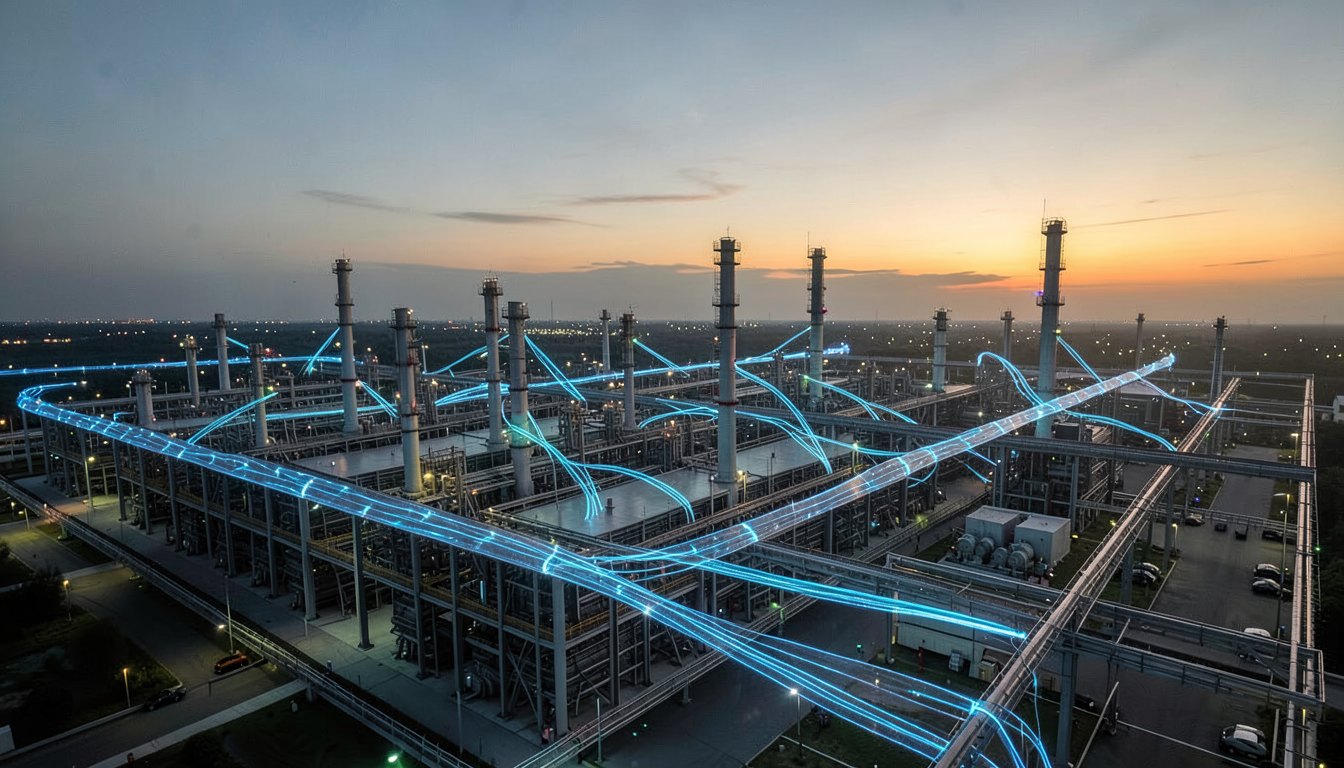
Based on the convergence of energy-aware scaling, device-resident fault tolerance, and optimal quantization, the next inflection point will occur when AI systems achieve "autonomous sustainability" in resource-constrained environments. The evidence suggests that by 2028, the integration of dynamic quantization (like GRINQH) with persistent kernel fault tolerance (like Concordia) will unblock the deployment of high-performance LLMs on edge devices globally. This shift will mark the end of the cloud-dependent era for critical inference, allowing intelligent systems to operate with full reliability and minimal energy overhead independently of central data centers. The trajectory is no longer about building bigger models; it is about building smarter, self-sufficient ones.
KHI Research Editorial Team
Published by KHI Research · 2026-06-23 · AI Methodology
Discussion