
The most laborious part of a gene-editing experiment isn't the pipetting—it's the design. For every successful CRISPR experiment, researchers spend weeks navigating a labyrinth of guide RNA selection, delivery method optimization, and validation protocol drafting, each step requiring specialized expertise and manual tool-switching. On May 27, 2026, a cluster of papers published across arXiv and bioRxiv suggests this bottleneck may finally be breaking. The convergence of large language model agents, deep learning architectures, and streamlined molecular biology methods is pushing gene-editing toward a future where the researcher's role shifts from hands-on technician to strategic director—a transition that could democratize access to advanced genome engineering while simultaneously raising the ceiling on experimental complexity.
The Rise of Autonomous Experiment Design
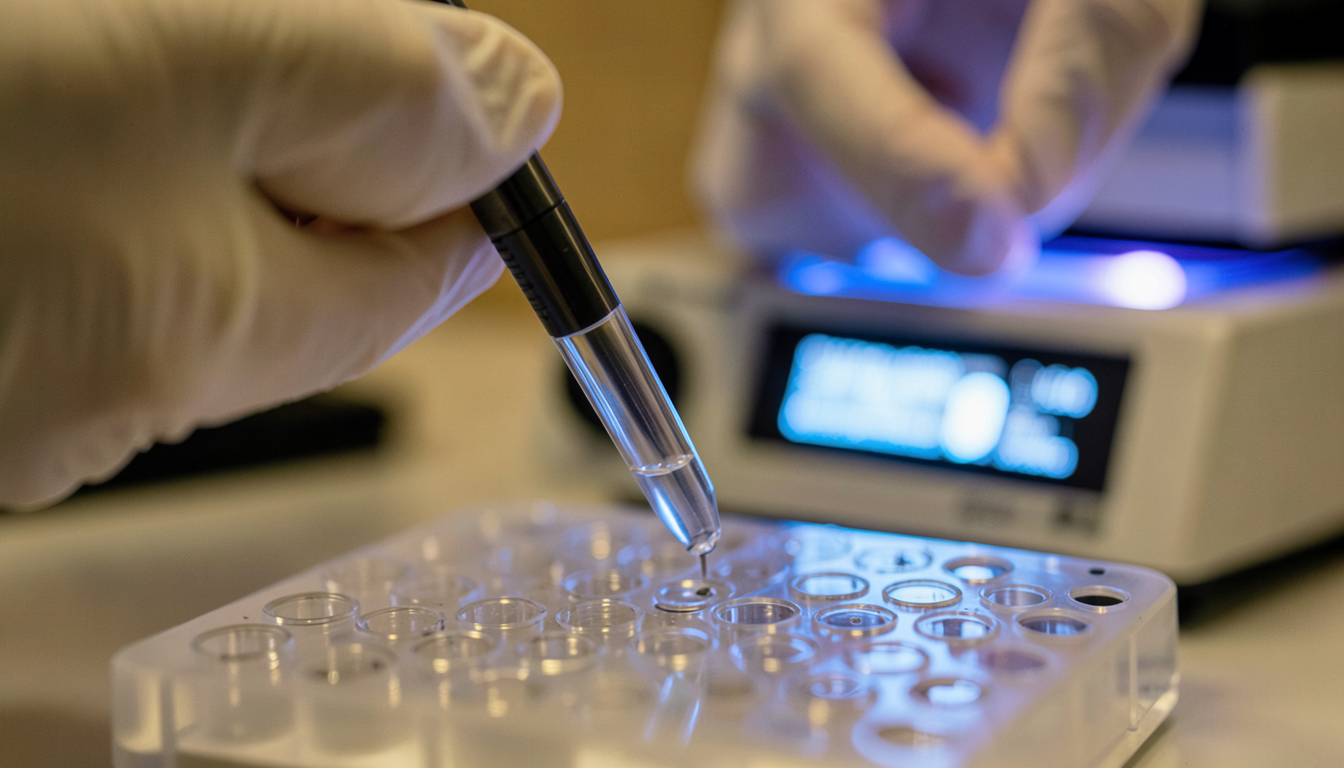
The most striking development in today's research cluster comes from a system called CRISPR-GPT, which introduces an LLM agent architecture capable of automating the entire CRISPR experiment design pipeline without human intervention. Unlike previous attempts that used LLMs for isolated tasks like primer design or literature search, CRISPR-GPT operates as a sequential reasoning engine that invokes specialized modules in the correct order: CRISPR system selection, guide RNA design, delivery method recommendation, protocol drafting, and validation experiment design. The system was validated in a real-world use case for non-expert researchers, suggesting that the barrier to entry for gene-editing experimentation may be about to drop substantially.
What makes this architecture distinct from simple LLM prompting is its integration of domain knowledge and external computational tools. The agent doesn't just generate text—it calls actual bioinformatics tools for guide RNA scoring, references curated databases for delivery method recommendations, and structures its outputs according to experimental design best practices. This represents a genuine step beyond the chatbot paradigm: the LLM serves as an orchestrator rather than a generator, coordinating specialized modules that each perform a well-defined computational task. For a field that still struggles with reproducibility and standardization, this agentic approach offers a path toward consistent, documented, and auditable experiment design.
From Sequence to Function: A Paradigm Shift in Synthetic Biology
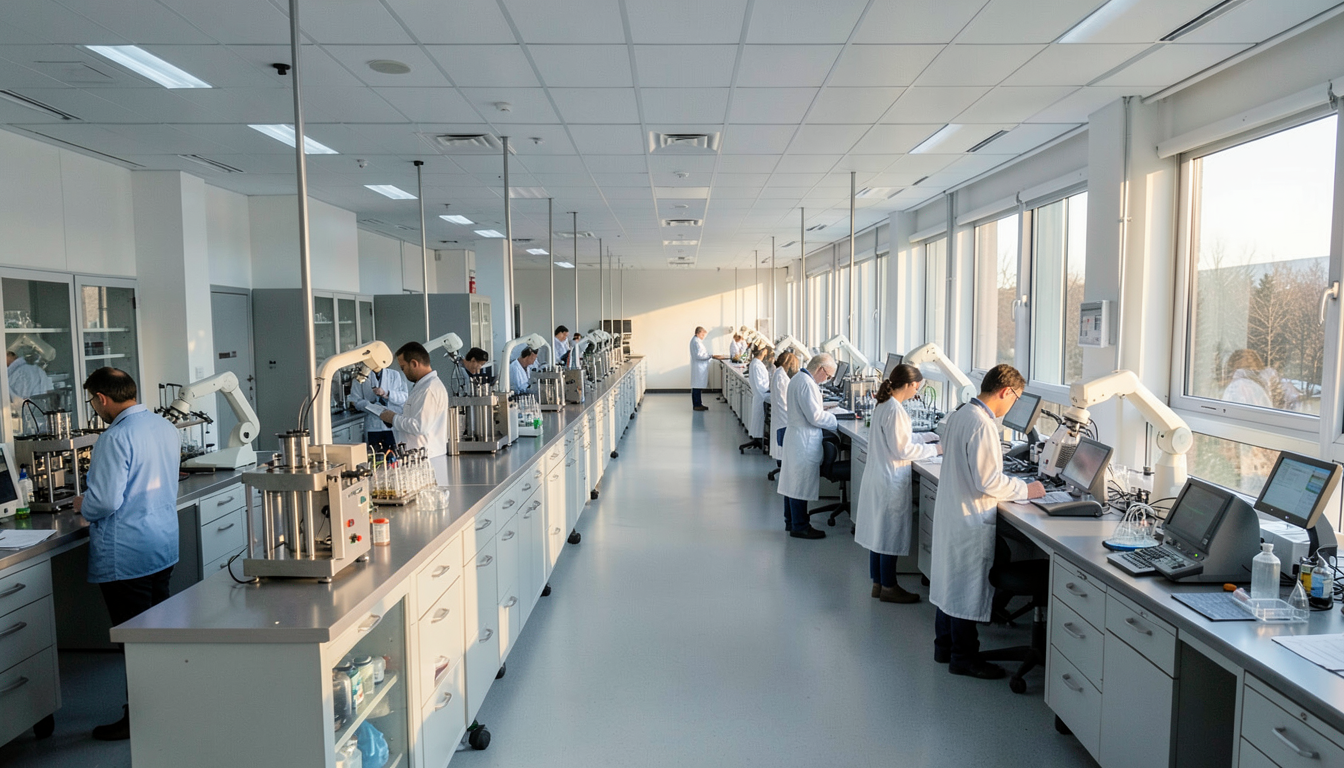
While CRISPR-GPT addresses the practical challenge of automating experiment design, a visionary paper on functional synthetic biology (arXiv:2207.00538) proposes something far more radical: reorienting biological system design from sequence-based to function-based abstraction. The paper, which describes itself as requiring "conceptual and organizational change, as well as supporting software tooling," envisions a future where synthetic biologists work with standardized functional parts rather than bespoke sequences.
The implications are profound. Today, virtually every CRISPR experiment begins with sequence-level design—choosing specific guide RNA sequences, designing donor templates with precise homology arms, and optimizing codon usage for expression. This sequence-centric approach means that even small changes in experimental context require complete redesign. A guide RNA that works perfectly in HEK293T cells may fail entirely in primary T cells, not because the fundamental biology is different, but because the specific sequence context changes.
Functional synthetic biology proposes to abstract away these sequence-level details, instead defining parts by their function—a guide RNA that achieves >90% editing efficiency in a defined context, a promoter with a specific expression profile, a terminator with known read-through probability. The vision is analogous to the transition in electronics from discrete transistor-level design to standardized logic gate libraries. If realized, this would decouple biological device engineering from application specifics, reducing technical risk and cost while improving design reuse and predictability.
The paper is upfront about the challenges, calling explicitly for "conceptual and organizational change, as well as supporting software tooling." This is not a near-term implementation but a long-term vision—one that will require new standards for functional characterization, new repositories for functional parts, and new mindsets among both tool developers and experimentalists.
From Human Design to Agentic Automation

The CRISPR-GPT system represents a concrete step toward operationalizing the kind of design automation that functional synthetic biology envisions. Rather than abstract functional parts, CRISPR-GPT works with the current reality of sequence-specific guide RNAs, but automates the decision-making process that researchers currently perform manually.
The system operates through a modular architecture: it sequentially invokes specialized components for CRISPR system selection (choosing between Cas9, Cas12, Cas13, and their variants based on experimental goals), gRNA design (considering on-target efficiency, off-target potential, and PAM sequence compatibility), delivery method recommendation (viral, non-viral, physical methods based on cell type and application), protocol drafting (generating step-by-step laboratory procedures), and validation experiment design (specifying controls and readout assays). Human oversight remains possible but is not required—the system can execute the full pipeline autonomously.
This represents a qualitative shift. Previous automation efforts in CRISPR experiment design have focused on individual components—tools for gRNA design, for instance, or databases for off-target prediction. CRISPR-GPT integrates these components while adding the reasoning layer that traditionally requires a PhD-level understanding of molecular biology. For non-expert researchers—clinicians wanting to test a therapeutic edit, engineers building synthetic gene circuits, or biologists in fields distant from molecular genetics—this could dramatically lower the barrier to entry.
Predictive Accuracy at the Cutting Edge
While CRISPR-GPT addresses the experiment design pipeline, another paper tackles the equally critical challenge of predicting where CRISPR systems will and won't work. The work on DeepFM-Crispr (arXiv:2404.18021v2) achieves state-of-the-art performance for Cas13d on-target and off-target prediction by combining large language model-derived representations with a transformer architecture.
This is technically significant because Cas13d, unlike the more famous Cas9, targets RNA rather than DNA—making it a powerful tool for transient gene knockdown, RNA base editing, and viral RNA detection. But its guide RNA design has been less well-characterized than Cas9's, with existing prediction models achieving limited accuracy. DeepFM-Crispr addresses this by extracting features from guide and target sequences using pre-trained language models, then processing these through a transformer that captures long-range dependencies in the sequence context. The result: substantially improved prediction of both on-target activity and off-target effects, validated against benchmark datasets.
The broader lesson here is that LLM-derived representations are proving valuable across the CRISPR toolkit, not just for Cas9 but for orthogonal systems like Cas13d. As the CRISPR repertoire expands—with Cas12, Cas13, Cas14, and engineered variants—the ability to rapidly predict performance for each system becomes critical. DeepFM-Crispr's architecture is designed to be adaptable to these diverse systems, suggesting a future where a unified prediction framework covers multiple CRISPR variants.
Streamlining the Workflow: FAB-CRISPR
While CRISPR-GPT automates design and DeepFM-Crispr improves prediction, FAB-CRISPR addresses the practical bottleneck of executing the designed experiments. The system streamlines N- or C-terminal protein tagging in mammalian cells with a single-cloning-step HDR donor plasmid construction and rapid antibiotic selection.
This matters because protein tagging is fundamental to modern cell biology—it enables visualization, purification, and functional analysis of endogenous proteins. Traditional methods require multiple cloning steps, lengthy selection processes, and careful validation. FAB-CRISPR reduces this to a single cloning step with rapid antibiotic selection, cutting the time from design to validated tagged cell line by weeks.
The system works by using a standardized donor plasmid architecture that can accommodate any guide RNA and any protein tag sequence, with cloning achieved through a single restriction-ligation step. The antibiotic selection marker is designed for rapid enrichment of edited cells, and the entire cassette is flanked by homology arms optimized for HDR (homology-directed repair) efficiency. For researchers studying protein localization, interaction partners, or post-translational modifications, this represents a substantial reduction in experimental overhead.
What This Means: Real-World Impact
The convergence of these three advances—CRISPR-GPT's autonomous design, DeepFM-Crispr's improved prediction, and FAB-CRISPR's streamlined construction—points toward a future where gene-editing experiments become dramatically more accessible.
For academic researchers, the implications are twofold. First, the barrier to entry for gene-editing experiments is lowered: a lab without specialized CRISPR expertise can now design and execute edits using automated tools. Second, the cost structure shifts: the expensive, time-consuming parts of the workflow—design iterations, off-target validation, and protocol optimization—become automated, reducing the need for highly specialized personnel.
For the broader biotechnology ecosystem, the standardization implied by CRISPR-GPT's modular architecture and FAB-CRISPR's simplified cloning has implications beyond convenience. If these methods become widely adopted, the reproducibility crisis that has plagued CRISPR research—where guide RNAs that work in one lab fail in another—could be substantially mitigated. When guide RNAs are designed by the same algorithm, delivery methods selected by the same decision framework, and plasmids constructed through the same streamlined process, variability naturally decreases.
This is not to say that biological variability disappears—it does not. But the experimental noise introduced by inconsistent design choices can be minimized, allowing true biological signals to emerge more clearly. For the field of functional genomics, where CRISPR is used to probe gene function at scale, this reduction in technical noise is transformative.
The Questions That Remain
The trajectory is clear: gene-editing experiment design is being automated, standardized, and democratized. But several questions remain open:
How will LLM-based experiment design tools handle the inherent context-dependency of CRISPR experiments? Guide RNA efficiency depends on cell type, epigenetic state, chromatin accessibility, and delivery method—factors that are often poorly documented in published studies. Can LLM agents learn to account for these contextual variables, or will they perpetuate the biases present in training data from well-studied cell lines?
What validation standards will emerge for AI-designed experiments? As these tools become more capable, the bottleneck shifts from experiment design to execution. How will the field validate that an AI-designed CRISPR experiment is not just feasible but optimal? What benchmarks should be established, and who should establish them?
Will the democratization of gene-editing design accelerate or complicate biosafety governance? As CRISPR experiment design tools become accessible to non-experts, the potential for both beneficial and problematic applications grows. How should the research community balance openness against the need for responsible use?
These are not hypothetical questions. The papers surveyed today demonstrate that the technical foundations for automated, accessible gene-editing design are being laid now. The community must begin addressing the governance and standardization challenges alongside the technical ones.
KHI Research Editorial Team
Published by KHI Research · 2026-05-27 · AI Methodology
Discussion