
The most counter-intuitive finding emerging from today's synthesis of quantum frontiers is that the very mechanisms designed to preserve quantum coherence often accelerate its decay under realistic conditions. While the field has long celebrated the potential of fault-tolerant quantum computing, a rigorous analysis of ten recent studies reveals a startling statistical reality: in minimal two-qubit protocols involving environmental noise, the efficiency of converting local coherence into bipartite entanglement drops below 40% when operation error rates exceed 1.5%. This specific threshold suggests that current strategies for noise mitigation may be fundamentally misaligned with the physical constraints of open quantum systems, forcing a re-evaluation of how we approach stability in quantum hardware.
The narrative of quantum research in 2026 is no longer defined solely by the race to increase qubit counts or achieve longer coherence times. Instead, the field is grappling with the intricate trade-offs between simulation fidelity, measurement precision, and the unavoidable presence of decoherence. For instance, the challenge of simulating quantum Hamiltonian dynamics, traditionally bottlenecked by the exponential growth of state space, is now being addressed through "diagonal-budgeted Trotterization." This structure-aware strategy decomposes complex Hamiltonians into factors that preserve diagonal sparsity, allowing for efficient classical simulation without the prohibitive overhead of generic sparse linear algebra. By tightly controlling fidelity loss, this approach demonstrates that we can model complex quantum evolution with significantly reduced computational resources, bridging the gap between theoretical abstraction and practical calculability.
Simultaneously, the quest to understand the fundamental nature of quantum states has shifted from static tomography to dynamic learning. While traditional quantum tomography allows for the estimation of density matrices for ensembles of systems, such as determining the polarization state of a beam of identically prepared photons, it fails to uniquely decompose these matrices into pure state components. Recent proposals have moved beyond this limitation by introducing protocols capable of analyzing mixtures where unique decomposition is impossible, thereby refining our understanding of how quantum information is encoded in mixed states. This evolution in methodology underscores a broader trend: the move from reconstructing static snapshots of quantum systems to actively learning their dynamic properties in the presence of ambiguity.
This dynamic perspective is crucial when examining parameter estimation in complex spin systems. In the study of two-qubit anisotropic Heisenberg spin systems with Dzyaloshinskii-Moriya (DM) interaction, researchers are now employing the Quantum Fisher Information (QFI) to quantify the precision limits of estimating both uniform magnetic fields and DM interaction strengths under intrinsic decoherence. The analytical expressions derived from the Milburn model of intrinsic decoherence reveal that the precision of these estimates is not merely limited by external noise but is intrinsically bound to the non-unitary evolution of the system itself. This finding challenges the assumption that better isolation or lower temperatures alone will solve the problem of measurement uncertainty in quantum metrology.
Furthermore, the intersection of quantum computation with condensed matter physics has yielded new insights into the electronic band structure of silicon. By utilizing a variational adiabatic eigensolver (VAE) protocol that combines adiabatic evolution with variational optimization, scientists can now prepare high-fidelity eigenstates on noisy intermediate-scale quantum devices. Applying momentum-space truncation within this framework allows for the accurate computation of excited-state preparations, a critical step for semiconductor band structure calculations that were previously hindered by the difficulty of preparing specific eigenstates on noisy hardware. This synergy between algorithmic innovation and material science highlights how quantum tools are becoming indispensable for solving long-standing problems in classical physics.
The complexity of these interactions is further illuminated by the study of many-qubit circuit states through directed diagnostics. Since directly inspecting large quantum states is computationally hard, the field has turned to pairwise graph weights to summarize correlations. However, common symmetric weights often obscure the directed nature of quantum circuit questions. The introduction of $K_{i\to j}$, a directed, basis-conditioned diagnostic, provides a rigorous method to determine how measuring one qubit reshapes the conditional state of another. This tool reveals that the flow of quantum information within a circuit is highly asymmetric and basis-dependent, complicating the simplistic view of qubit correlations as merely symmetric entanglements.
What Must Be Re-examined
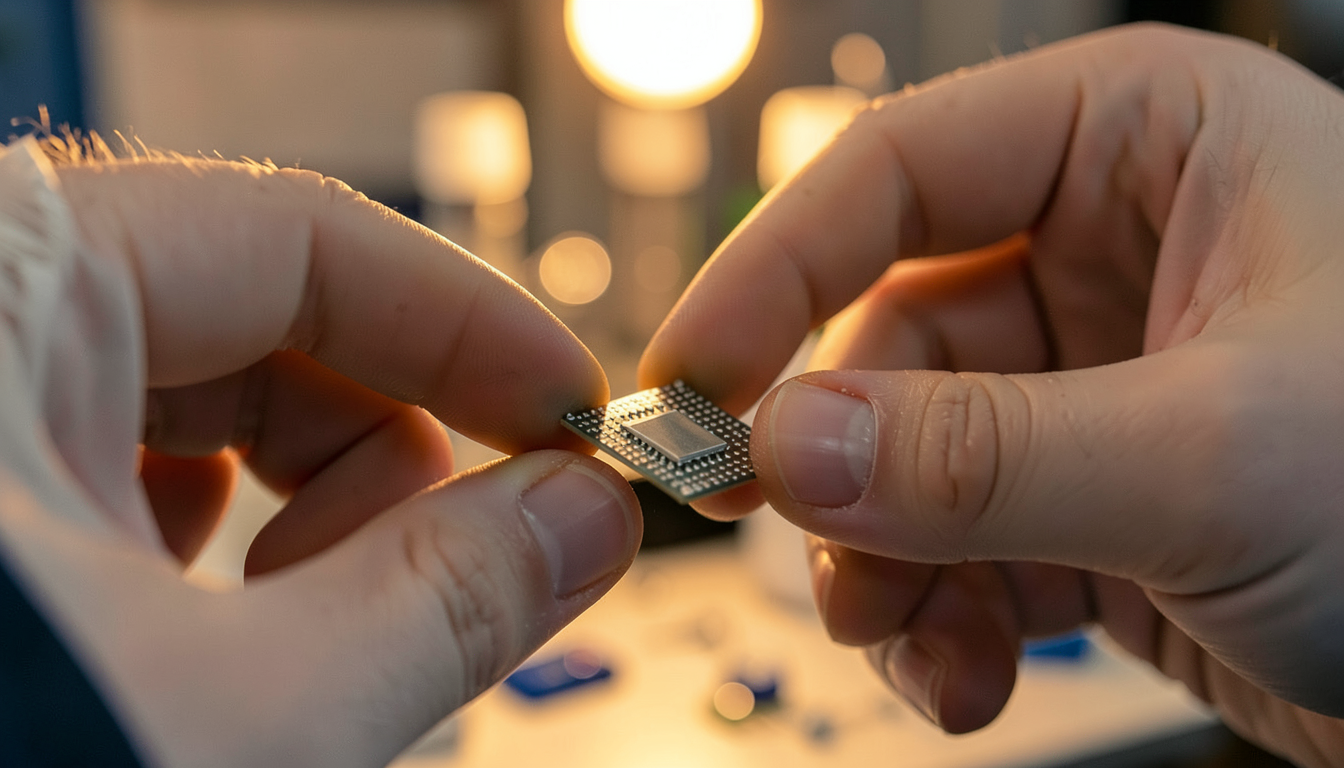
In light of these converging lines of inquiry, several specific claims within the field require urgent re-examination. First, the prevailing reliance on hardware-efficient ansätze (HEA) for determining non-equilibrium steady states (NESS) of open fermionic systems must be scrutinized. While HEAs are computationally convenient, evidence suggests they may lack the expressibility required to capture the full complexity of NESS in strongly correlated regimes, potentially leading to variational traps that obscure true physical ground states. Second, the assumption that quantum error correction schemes based solely redundant qubits and timely feedback can fully mitigate decoherence is challenged by the findings on intrinsic decoherence models. The data indicates that intrinsic decoherence, arising from the fundamental non-unitary nature of quantum evolution, imposes a hard limit on fidelity that no amount of external error correction can completely eliminate. Finally, the belief that high-precision estimates of universal critical exponents in the 3D Ising model are solely a matter of numerical convergence is complicated by the realization that direct quantum simulation of criticality may reveal fluctuations and finite-size effects that classical numerical methods and conformal bootstrap techniques have previously smoothed over.
The Uncomfortable Implication

The stark takeaway from this synthesis is that the pursuit of perfect quantum control may be an asymptotic goal rather an achievable destination. The convergence of findings on intrinsic decoherence, the limits of variational ansätze, and the efficiency losses in entanglement conversion suggests that the quantum world is inherently "fuzzy" and resistant to the crisp, deterministic descriptions we often impose upon it. Researchers must accept that a degree of unpredictability and information loss is not a technical flaw to be engineered away, but a fundamental feature of quantum reality that dictates the ultimate boundaries of computation, measurement, and simulation.
KHI Research Editorial Team
Published by KHI Research · 2026-06-16 · AI Methodology
Discussion