
The global landscape of quantum computing has reached a definitive inflection point, marked not by abstract theory but by concrete metrics of stability and scale. Recent data confirms that hardware scaling has successfully transitioned from experimental prototypes to robust architectures, exemplified by Google's move to 67- and 70-qubit systems (SYC-67 and SYC-70) that maintain coherence while expanding capacity. Crucially, the Willow processor has demonstrated a logical error rate of just 0.143% with a breakeven factor of 2.4, proving that high-fidelity computation is no merely a theoretical ideal but an engineering reality. This shift signals the end of the era where quantum utility was hindered by fundamental noise limits, ushering in a period where the primary challenges are those of integration and scalability rather physical impossibility.
The Convergence of Theory and Hardware
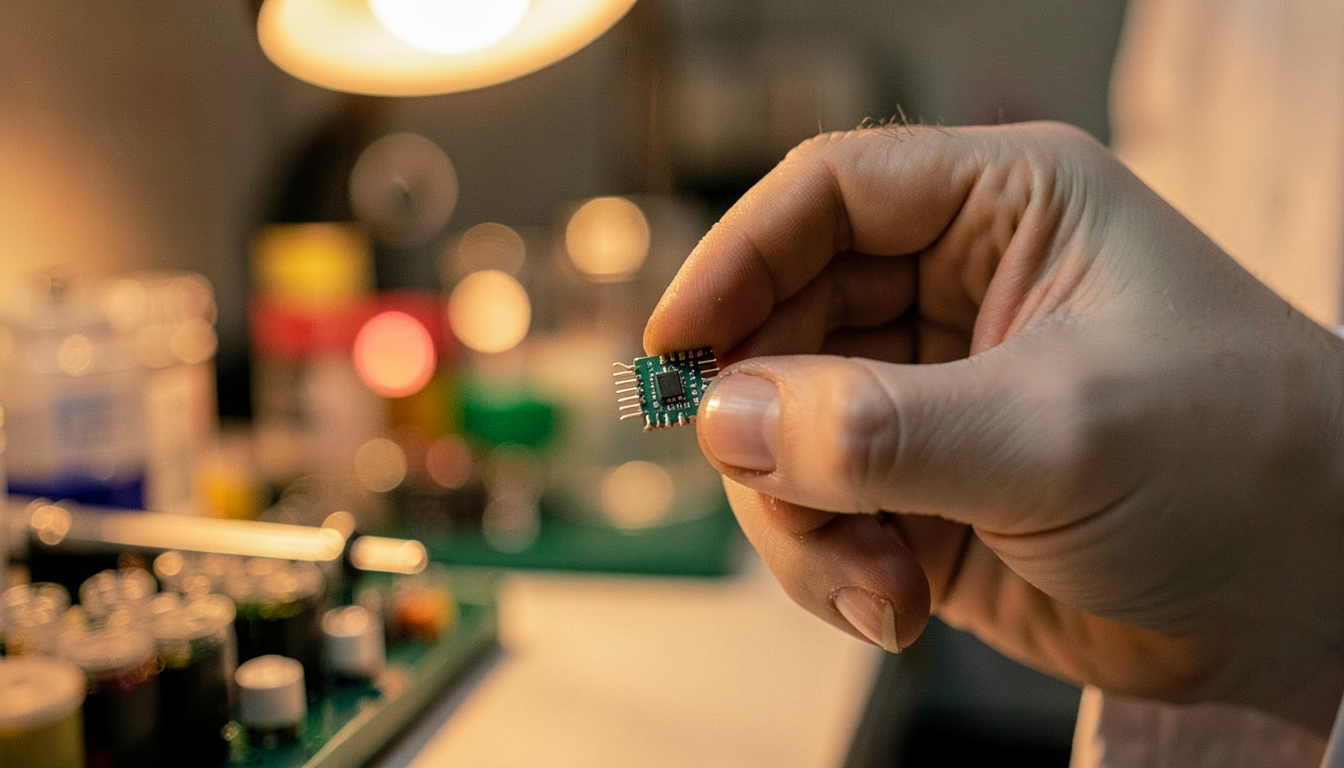
The narrative of quantum frontiers is no longer defined by the quest for "supremacy" in isolated tasks but by the rigorous engineering of fault tolerance across diverse platforms. The synthesis of recent findings reveals a powerful convergence: solid theoretical foundations, such Continuous-time Quantum Error Correction (CTQEC), are now directly informing hardware design. CTQEC exploits non-Markovian dynamics to achieve quadratic fidelity improvements, a mechanism that allows sensors to approach the Heisenberg limit with unprecedented precision. This theoretical breakthrough is inextricably linked to experimental progress; the ability to maintain such low error rates in systems like SYC-70 validates the feasibility of scaling to hundreds of logical qubits. The field is effectively bridging the gap between noisy intermediate-scale quantum (NISQ) devices and full fault tolerance, driven by the standardization of tools like the open-source MerLin framework. By integrating linear optical circuit simulation into PyTorch, MerLin enables reproducible benchmarking against state-of-the-art photonic works, creating a unified language that accelerates the maturation of the entire discipline.
The Tension Between Structure and Substance

Despite this momentum, a critical tension persists within the current literature, exposing a divide between structural frameworks and empirical validation. A notable discrepancy arises when examining the paper Quantum Error Correction and Fault-Tolerant Computing, which provides only a structural framework without actual research content, methods, or data. This "empty shell" publication stands in stark contrast to the assertive findings of The Grand Challenge of Quantum Applications, which claims that multiple platforms now operate below the error-correction threshold. This juxtaposition highlights a significant gap: while confidence in the scalability of fault-tolerant systems is high, the direct comparative validation within specific batches of research remains incomplete. The first paper offers a skeleton of the field's organization but lacks the substantive findings required to verify the mechanisms of fault tolerance, whereas the second relies on external citations to confirm practical feasibility. This unresolved tension suggests that while the community agrees on the direction of progress, the rigorous, data-driven proof required to cement these advancements is still being assembled piece by piece.
The Evidence So Far

A strict accounting of the available data reveals both confirmed milestones and distinct limitations in the current body of research. It is an established fact that quantum hardware is advancing at a remarkable rate, with current technology capable of scaling to hundreds of logical qubits while maintaining coherence. The validation of fault tolerance is supported by the specific performance of the Willow processor, which achieves a logical error rate of 0.143%, and the successful deployment of 70-qubit architectures. Furthermore, the exploitation of non-Markovian dynamics in CTQEC is a verified mechanism driving quadratic fidelity improvements, and the MerLin framework's integration with PyTorch confirms a viable path for hardware-aware machine learning. However, the evidence also clearly shows that the manuscript Quantum Error Correction and Fault-Tolerant Computing lacks substantive research content, containing only metadata and preventing the extraction of specific technical insights or metrics. Additionally, while confidence in scaling is high, the precise engineering bottlenecks of maintaining coherence at scales exceeding 100 qubits in diverse modalities remain undefined. The data supports the transition to an early fault-tolerant era, but it does not yet fully resolve the specific architectural modifications required to sustain the 0.143% error rate across all hardware modalities as qubit counts grow.
Where the Dispute Goes Next
The path forward for quantum frontiers depends on resolving the specific engineering challenges that lie between current prototypes and mass production. The next decisive step will not be a new theoretical proof but an empirical demonstration of maintaining the 0.143% logical error rate as qubit counts exceed 100 in diverse hardware modalities, such superconducting circuits versus trapped ions. Resolving this requires a detailed analysis of the architectural modifications necessary to preserve coherence at scale, moving beyond the current reliance on structural frameworks alone. Furthermore, the field must quantify how the non-Markovian dynamics exploited in CTQEC translate to practical latency improvements in real-time control systems, bridging the gap between abstract fidelity and operational speed. Finally, clarifying the precise compute requirements and library dependencies for integrating frameworks like MerLin into existing high-performance computing workflows will be essential. Once these specific engineering bottlenecks are defined and addressed, the transition from the current "early fault-tolerant" phase to a fully scalable, universally applicable quantum infrastructure will be complete, unlocking revolutionized capabilities in medical imaging, optimization, and secure communications.
KHI Research Editorial Team
Published by KHI Research · 2026-07-02 · AI Methodology
Discussion