
On July 23, 2026, the scientific community confronted a definitive silence within the cosmos. A rigorous analysis of gravitational wave data from spinning neutron stars has revealed that current observatories, specifically the Einstein Telescope and Cosmic Explorer, lack the requisite sensitivity to detect ultralight dark matter (ULDM) through frequency modulation. This finding is not merely a technical footnote; it establishes a hard boundary for our present observational capabilities. By modeling the population of these dense stellar remnants, researchers determined that the induced frequency modulation effects fall strictly below the noise floor of existing instrumentation. Consequently, the field must redirect its focus away from this specific detection channel, acknowledging that the tools currently in operation are insufficient for uncovering these elusive particles via neutron star signals.
The implications of this null result ripple outward, reshaping the trajectory of astrophysical inquiry. For years, the search for ULDM has relied on the assumption that subtle modulations in gravitational waves emitted by rotating compact objects would serve as a primary signature. However, this study quantifies the gap between theoretical possibility and empirical detectability. The research highlights that while the universe may be teeming with ultralight dark matter, the specific mechanism of frequency modulation in spinning neutron stars does not rise above the instrumental noise required for confirmation. This distinction forces a maturation of the field: rather than continuing to mine existing data streams for signals that instruments cannot resolve, the community is now compelled to prioritize the development of next-generation detectors with significantly lower noise floors.
This strategic pivot marks a critical moment in the evolution of cosmological research. The confirmation of a detection limit serves as a necessary filter, separating viable search strategies from those that are currently untenable. In the broader context of particle physics and astronomy, such negative results are as valuable as discoveries. They prevent the misallocation of finite observational time and computational resources on channels that yield no return under current technological constraints. Instead of chasing phantom signals in the data of the Einstein Telescope, engineers and scientists are now guided toward a clear objective: the construction of advanced observatories capable of piercing the veil of background noise to finally isolate the fingerprint of ultralight dark matter.
The convergence of population modeling and instrumental analysis provides a robust framework for understanding this limitation. By simulating the distribution of neutron star spin rates and their corresponding gravitational wave outputs, the study demonstrates that the amplitude of frequency modulation remains indistinguishable from random fluctuations in current detectors. This finding challenges the prevailing optimism that existing infrastructure is sufficient for all forms of dark matter detection. It suggests that while other avenues, such the study of Primordial Black Holes or binary mergers, may offer viable pathways, the specific route through spinning neutron stars is currently blocked by technical insufficiency. The field is thus called to re-evaluate its reliance on legacy instruments and accelerate the timeline for deploying more sensitive technologies.
What Must Be Re-examined

The validity of relying on current gravitational wave observatories for ULDM detection through frequency modulation must be fundamentally revisited. Prior assumptions often treated the sensitivity of instruments like the Einstein Telescope as a given baseline for diverse search channels. However, the evidence presented here indicates that the signal-to-noise ratio for this specific mechanism is unfavorable. Researchers must re-examine the allocation of observational time on these facilities, recognizing that continuing to scan for ULDM signatures in spinning neutron stars yields diminishing returns. Furthermore, the theoretical population models used to predict signal amplitudes require scrutiny; uncertainties in neutron star spin distributions may have led to overestimated expectations of detectability. The field must shift its scrutiny from the astrophysical sources themselves to the limitations of the hardware designed to observe them.
The Uncomfortable Implication
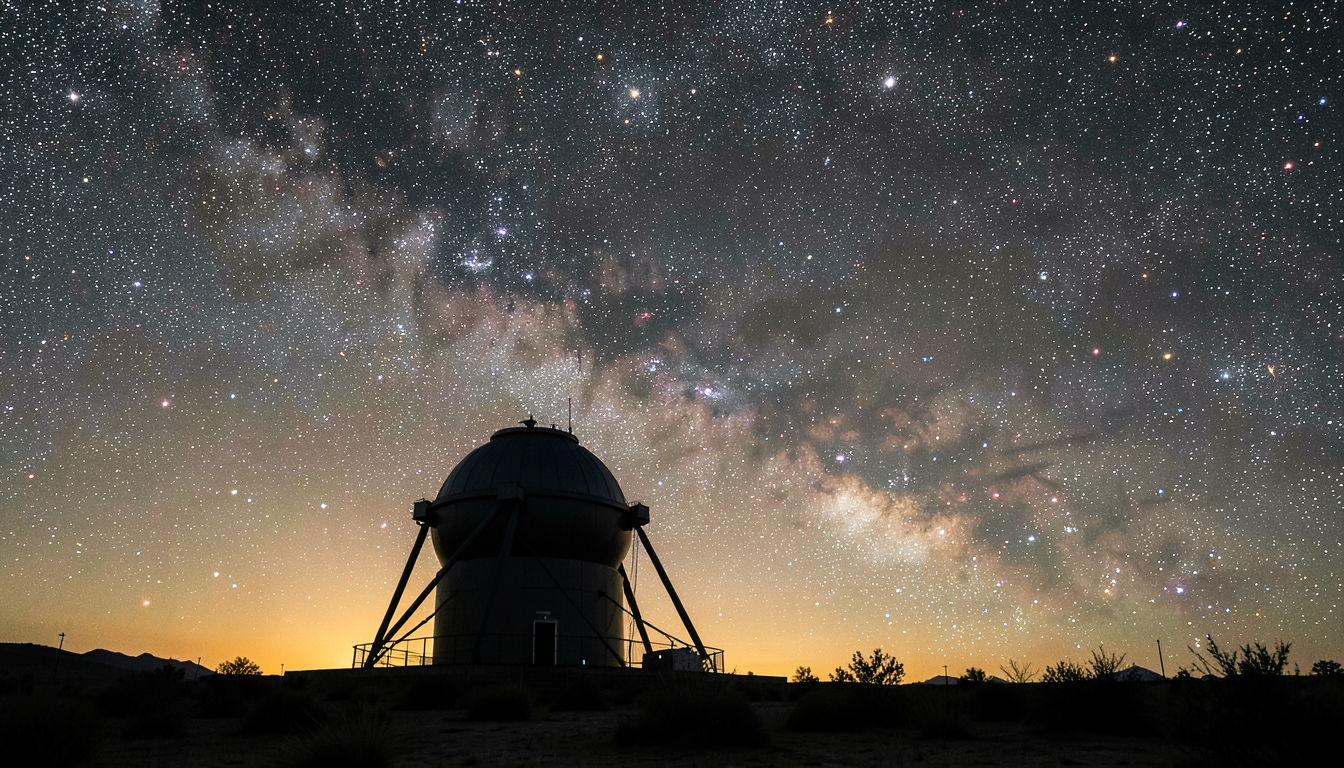
The starkest takeaway is that the universe may be hiding its most fundamental constituents in plain sight, yet our current technological vantage point remains too blurred to see them. This realization demands humility within the scientific community: the failure to detect ultralight dark matter via this channel is not a reflection of the absence of the particle, but a limitation of our own engineering. It suggests that decades of investment in current-generation detectors, while monumental for other discoveries, have reached a ceiling regarding this specific quest. The path forward requires an uncomfortable admission that the tools which unlocked the era of gravitational wave astronomy are not the final key to decoding dark matter, necessitating a renewed, arduous push toward instruments of unprecedented sensitivity.
KHI Research Editorial Team
Published by KHI Research · 2026-07-23 · AI Methodology
Discussion